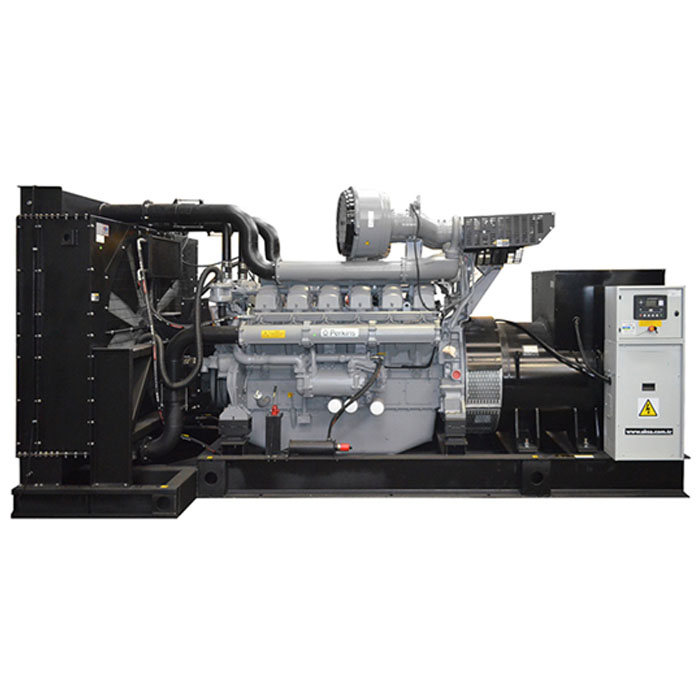
Generator

Generator

A generating set is the combination of a machine producing mechanical energy and an alternator. A power plant is in fact a “generator set coupled to a ‘boiler'”.

Also, in practice, we have become accustomed to speaking, for example, of hydraulic power station, nuclear power station, coal-fired power station, etc. But also of turbo-alternator group, hydraulic group, gas turbine group.

The name generating set is reserved for the combination of combustion or internal combustion engine and alternator (synchronous generator and more rarely asynchronous or continuous generator), complying with ISO Standard 8528-1.

For a generator or alternators to work, it requires speed regulation on the engine and voltage regulation on the alternator. In addition, they must be equipped with a set of sensors and safeties. Finally, they are equipped with a start-up and shutdown management system that can be manual or automatic. (we will see the technology used in more detail in a second article).

Autonomy

A generator should normally be self-contained. It therefore requires a source of starting energy which can be mechanical, pneumatic or electrical. The motor provides active power, expressed in KW, equivalent to what is billed by electricity production and distribution companies. It must be able to cope with consumption peaks (start-up of large equipment in particular) while its overload capacity is very limited. The overload capacity is nil for a so-called “emergency” group (in ESP Mode: emergency energy production) according to ISO 8528 standard and generally 10% for the others (PRP Mode: steady state production).

It is therefore necessary to ensure that the maximum load determined by the generator manufacturer will never be exceeded. This load is different depending on whether it is a continuous production unit, or not, with constant or variable load, emergency.

You should never rely on the power of the engine itself (expressed in KW): in addition to the efficiency calculated on the transmission, this power is determined at the maximum engine speed and not at the speed of rotation of the group, imposed by the frequency and the number of poles of the alternator (3000, 1500, even 1000rpm). A machine engine set for 2200 rpm delivers 30 to 40% less at 1500 rpm.

The alternator transforms this mechanical power into active power and “adds” to it the necessary reactive power. This is a very practical “mathematical model” (Boucherot method) to use. But in fact, it is enough for the regulation to adjust the voltage to the correct value for the necessary quantity of reagent to be generated.

There are therefore two fundamental equilibria

Frequency, for which the engine regulation constantly adjusts the injection so that the power absorbed is equal to the power generated. If too much is produced, the frequency increases and vice versa.

Voltage, for which the regulation of the alternator constantly adjusts the excitation so that the reactive power absorbed is equal to the reactive power generated. If too much is produced, the voltage rises and vice versa.

Note: this regulation is much more complex if you have an asynchronous generator (without regulation).

The characteristic quantity of the alternator is the current. Within the limits of what the exciter can withstand, between the minimum and maximum induction, the possibilities of overload are much higher than those of the motor… Machines equipped with a short-circuit corrector can commonly supply 3In . They can go up to 4In for the most efficient, for a few seconds.

This parameter is very important to ensure tripping of the circuit breaker protections. They are located downstream as well as the starting of asynchronous motors.

If the active power is insufficient, the unit ramps (underfrequency) or stalls. On the other hand, if the apparent power exceeds the rated power of the alternator, the alternator is overloaded. Then, the protection trips in order to protect its windings. In the case where this insufficiency is very important, as when starting a large motor, the voltage collapses and can even go to zero on small groups.

Use

As we have seen previously, there are different categories of people likely to use generators. Depending on whether it is a question of particular or professional needs. On a professional level, the uses are also diverse depending on the needs and circumstances. For example, a hospital must have a backup generator to replace the main source. It must be of significant power with regard to the energy consumption observed in this type of environment.

For some manufacturers, the choice may be towards a standby generator or an EJP type generator. This allows consumption to be capped during off-peak periods.

Production Mode

Advanced Production Mode

The generating set is used to cover the peak needs of the public electricity network.

In the presence of the normal EDF network, the generating set is in “rest or stand-by” mode. It only comes into operation to compensate for peaks in electricity consumption. This is an EJP mode of operation.

Autonomous Electric Power Generation Mode

The generator is used for energy production, supplying a distribution network. This type of installation finds its application on sites where the public distribution network is non-existent, and technically or economically impossible to set up, such as in the mountains, or even on an island. The annual operating time of these generators is often very high.

Emergency Production Mode

Emergency generators are intended to supply an establishment with electrical current in the event of the absence or failure of the public network. These generating sets start automatically as soon as it detects a network failure. This type of generating set is installed in buildings where mains power failures endanger human lives (hospitals or EHPADs) or even in the case of productivity losses (banks or data centers such as Datacenters).

Reverse Backup Production Mode

For sites where constant electricity production is critical, such as the launch site of the Ariane Espace shuttle or the lighting of a football stadium, a generator is responsible for the main energy production. If it were to have a technical failure, the relay is provided by the public network.

The generator is essential to the operation of many companies and administrations. Its dysfunction is synonymous with loss of productivity and money. It can be extremely dangerous in cases where it is used as a backup generator.

Technology

At the technological level, several elements must be considered depending on the type of use and especially the power to be produced. As previously explained, the majority of “domestic” applications are fulfilled by generating sets with a power generally below 10Kva of simple design operating mainly with gasoline and more rarely with diesel (diesel heat engine in this case).

As for industrial applications, the choice is much wider in order to meet the greatest number of people, including specific applications such as cogeneration (heat recovery for agricultural or industrial needs).

Industrial-type generating sets are of various types, mounted on a one-piece frame, with or without a protective cover in the event of outdoor installation, with or without a ventilation system (simple air-water radiator coupled to the internal combustion engine or with air vents). external or even remote fans).

The majority of industrial-type generating sets include the following elements or systems:

Ventilation

During its operation, the group consumes fuel and produces mechanical energy which is then translated into electrical energy by the alternator or the generator. Current generating sets often have an efficiency well below 50% compared to the calorific value of the fuel. That is to say, during its combustion, half of the fuel is converted into electrical energy while the other is converted into heat.

During its transformation, the fuel heats the group. This increase in temperature can lead to:

excess fuel consumption by the group,

drop in performance,

engine breakage.

The ventilation of a generating set is therefore necessary, in order to avoid overheating of the engine which can cause certain damage. If a high-power generating set is placed in a room with limited space, the radiator may be moved outside.

Preheating

Generators delivering high power are also larger. They require permanent maintenance of their temperature in order to optimize their start-up. Like a truck or vehicle engine, which is cold or even very cold in winter, we find that it is always difficult to start it.

In order to be able to start the engine when warm, a preheating circuit must maintain the temperature of the engine, from its extinction until its restart.

Thus for groups located outdoors, or whose premises have a fresh air opening, preheating can be extremely costly in terms of energy, because the heat emitted is dissipated outside.

In order to avoid any dispersion of the heat emitted by the heater outside the room, with a view to saving energy, the insulation registers placed at the fresh air inlet and hot air outlet close when the generating set is switched off, then controlled on opening when the latter is started.

This arrangement also allows the heat to be retained in the room, reducing the costs relating to maintaining the temperature of the motor when it is stopped. Gensets delivering high power are also larger. They require permanent maintenance of their temperature in order to optimize their start-up. Like a truck or vehicle engine, which is cold or even very cold in winter, we find that it is always difficult to start it.

In order to be able to start the engine when warm, a preheating circuit must maintain the temperature of the engine, from its extinction until its restart.

Thus for groups located outdoors, or whose premises have a fresh air opening, preheating can be extremely costly in terms of energy, because the heat emitted is dissipated outside.

In order to avoid any dispersion of the heat emitted by the heater outside the room, with a view to saving energy, the insulation registers placed at the fresh air inlet and hot air outlet close when the generating set is switched off, then controlled on opening when the latter is started.

This arrangement also allows the heat to be retained in the room, reducing the costs relating to maintaining the temperature of the motor when it is stopped.
In the case of a hooded type generating set, it is sometimes necessary to fit a water circulator when the internal combustion engine is stopped. The principle is that the electric resistance integrated in the crankcase makes it possible to heat the fluids internal to the engine.

Since the generating set is stopped, it is not possible to transfer this heat to all parts of the engine block, the use of a circulator makes it possible to standardize the heat throughout the system.

Conclusion

There are several types of generating sets in the so-called alternative energy segment, depending on whether the needs are domestic or industrial.
We have started to present the technology used in these generating sets; in particular for the so-called industrial groups.

Others products

Contact us