


A inverter, also known as an uninterruptible power supply (UPS), is an electrical device that provides backup power to a load when the power source fails.
A inverter differs from an auxiliary or standby power system in that it provides near instantaneous protection against input power interruptions, by supplying energy stored in batteries, supercapacitors or flywheels. inertia.
The run time of most UPSs is relatively short (only a few minutes) but sufficient to start a backup (or auxiliary) power source or properly shut down the protected equipment.
A inverter is typically used to protect IT equipment such as computers, data centers, telecommunications equipment, and other electrical equipment when a power failure could cause serious service interruptions or data loss.
How to choose an inverter?
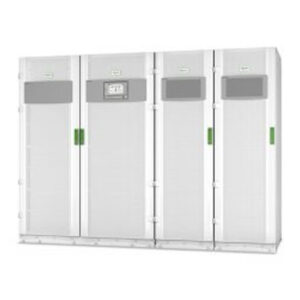
APC brand Data Center UPS
In order to choose the right inverter to protect your equipment from technical failures, you will need to take into account various elements and ask yourself several questions:
Why do you need an inverter?
An inverter performs two essential functions:
- protection of electrical equipment from voltage variations and interruptions.
- stabilization of electrical voltage and elimination of interference.
How much power does your equipment need to operate?
Estimate the power needs of all your equipment in order to size your UPS correctly. To do this, add up the power of all your devices (the power is expressed in VA).
Tip: prefer an inverter with an output power 20 to 25% higher than the total power of your devices, in order to have greater autonomy.
For computer equipment, also take into account the power factor of the inverter (ratio between the real power in watts and the apparent power in VA). For example, servers have a power factor of 0.9.
How much backup time do you need?
Depending on your needs, you can choose your UPS according to its autonomy capacities. In some cases, you will need to switch to a UPS system with battery backup to have more autonomy.
- Il existe 4 configurations d’onduleurs :
- Inverter with 15 minutes of autonomy without generator:
- In 95% of cases, power outages last less than 15 minutes, so with this type of UPS your devices are 95% protected.
- For example, allow you to save your data or stay online for a maximum of 15 minutes before the system blocks.
- Inverters with 15 minutes of autonomy with generator:
- The generating set starts as soon as the fault begins.
- This configuration is particularly reliable and protects against most situations
- Redundant inverter with generator and two power lines for dual power servers:
- Expensive setup.
- Protect against all power failures
- Inverters with a battery having an autonomy of two hours or more:
- When it is not possible to integrate generators, you will have to opt for a solution with batteries.
- Inverters with 15 minutes of autonomy with generator:
Tip: plan to install energy management software in case the duration of the outage exceeds the duration of the UPS autonomy. Such software makes it possible to save all your work in progress and accompanies the shutdown of your sensitive equipment.
- What is the voltage of your power source?
- This depends on your geographical area:
o In North America the voltage is usually 120V or 208/240V.
o Europe and Asia generally supply 230V electricity.
Make sure the UPS input plug matches the outlets on your power source.
- Where do you plan to install your inverter?
Inverters have different formats and shapes, make your choice according to the space you have:
o There are rack models that can be mounted in standard rack cabinets (height between 1U and 14U, U = rack space). They are preferred in small spaces, for example for server and network applications.
o For desktop computing applications or networked workstations, opt for the tower form factor, where the UPS stands upright on the floor, desk or shelf.
o There are also very compact desktop models. They make it possible to protect computers, for example. They are more affordable than tower inverters but have a lower capacity.

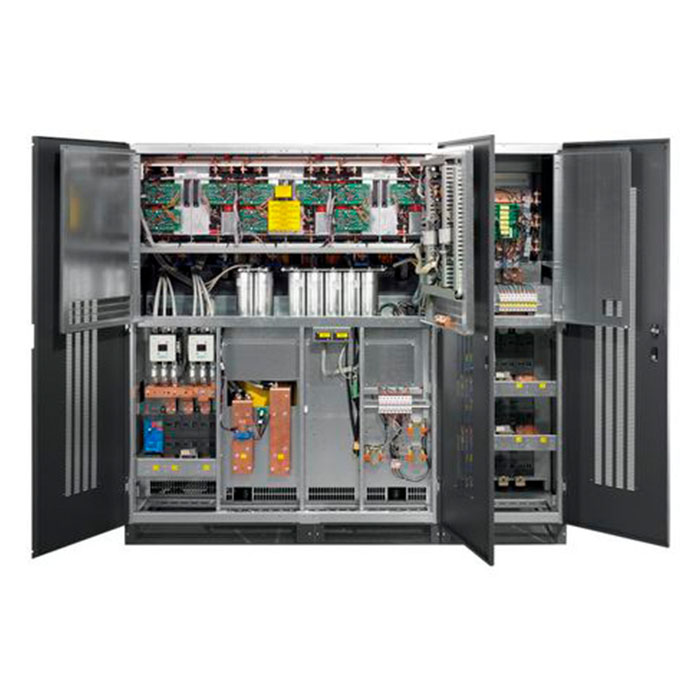
Il existe 3 type d’onduleurs :
- Off-line inverters:
- Devices connected to off-line inverters are powered by the grid.
- If the voltage drops below a certain threshold, the battery takes over and the inverter transforms the current into an alternating voltage.
- They have a power of 1kVA.
- In-line (or line interactive) UPS: These are off-line inverters equipped with a voltage regulator that allows switching to the battery in less than 2 milliseconds.
- Their power oscillates between 500VA and 5kVA.
- o On-line inverters:
They produce alternating current continuously from the battery which is itself connected to the mains. Their power exceeds 5kVA.
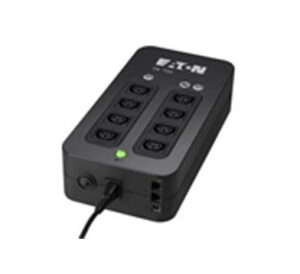
UPS off-line
These inverters are quite inexpensive. For example, they are suitable for office automation equipment.
On the other hand, in the event of a breakdown, a power cut of a few milliseconds can be observed. They are therefore less reliable than other types of inverters.
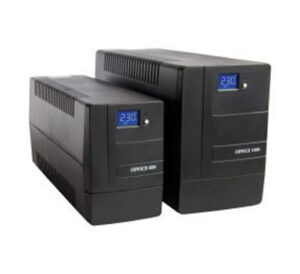
UPS in-line
These inverters make it possible to switch over to the battery in less than 2 milliseconds. They are therefore very reliable and offer better protection than off-line UPSs.
They are suitable for sensitive equipment connected to networks where the voltage is unstable and subject to outages. They are also suitable for protecting the computer servers of small businesses.
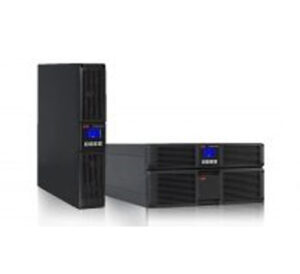
UPS on-line de la marque ABB
They produce alternating current continuously. If the voltage drops at the inverter input, the battery stops being charged but the output voltage remains stable.
On-line inverters are therefore particularly suitable for sensitive equipment that needs to be powered continuously (such as data center servers, industrial installations or medical equipment).
What are the other criteria to take into account for an uninterruptible power supply (UPS)?
Energy efficiency and IoT are two new criteria to consider when choosing an inverter.
- Inverters in eco mode
Like more and more industrial equipment, inverters are now available in eco mode.
Inverters consume energy even when idle. To overcome this, some manufacturers have developed a simple ECO mode by bypassing the inverter: the inverter continues to detect failures in real time, however it is not able to supply energy immediately. It needs a few milliseconds before it activates and starts providing backup power. This type of ECO mode is therefore less reliable than an inverter that operates conventionally.
Manufacturers like Schneider Electric have developed ECOnversion mode inverters to solve this problem. These new inverters work constantly so that when the power goes out, they themselves are already activated. There is therefore no delay likely to affect the lo
- Smart inverters
With the development of the IoT, it is now possible to connect inverters, equip them with sensors and make the entire electrical system intelligent. We can then regularly collect data on the state of the inverter and the electrical system, detect electrical problems before a breakdown, and thus correct anomalies upstream.

Low Voltage Panel

Rectifier (Battery Charger)

Voltage Regulator
